Safety Comes Before the Shot
Fireworks can produce spectacular photographs when the camera is prepared before the first burst. The most important photography rule is simple: never sacrifice safety for a better photograph.
Choose a safe viewing position with a clear line of sight and frame the scene before the display begins. Do not move closer to an active firework to improve the photograph. A wider lens, wider composition or later crop is safer than entering an operating area.
A tripod is useful because fireworks often require longer exposures than ordinary handheld photography. A stable camera reduces shake and helps preserve light trails. If you are using a phone, a small tripod or stable surface can help. Keep all equipment outside the operating area.
Fireworks can spread farther than expected, so a slightly wider frame often works better. Leave enough space above the horizon for the burst. After observing the first few effects, adjust framing from the same safe position.
Phone and Camera Settings
Modern smartphones can produce excellent fireworks photographs. Clean the lens before shooting and avoid excessive digital zoom. If manual controls are available, experiment with a lower ISO and slower shutter speed. If the phone supports focus and exposure lock, set them before the main action. Exact settings vary by phone and lighting conditions.
For a dedicated camera, manual exposure can provide consistent results. A lower ISO can reduce noise, while a slower shutter speed can capture light trails. Aperture depends on the lens and surrounding light. There is no single "fireworks setting" that works for every display, so review early frames and make small adjustments.
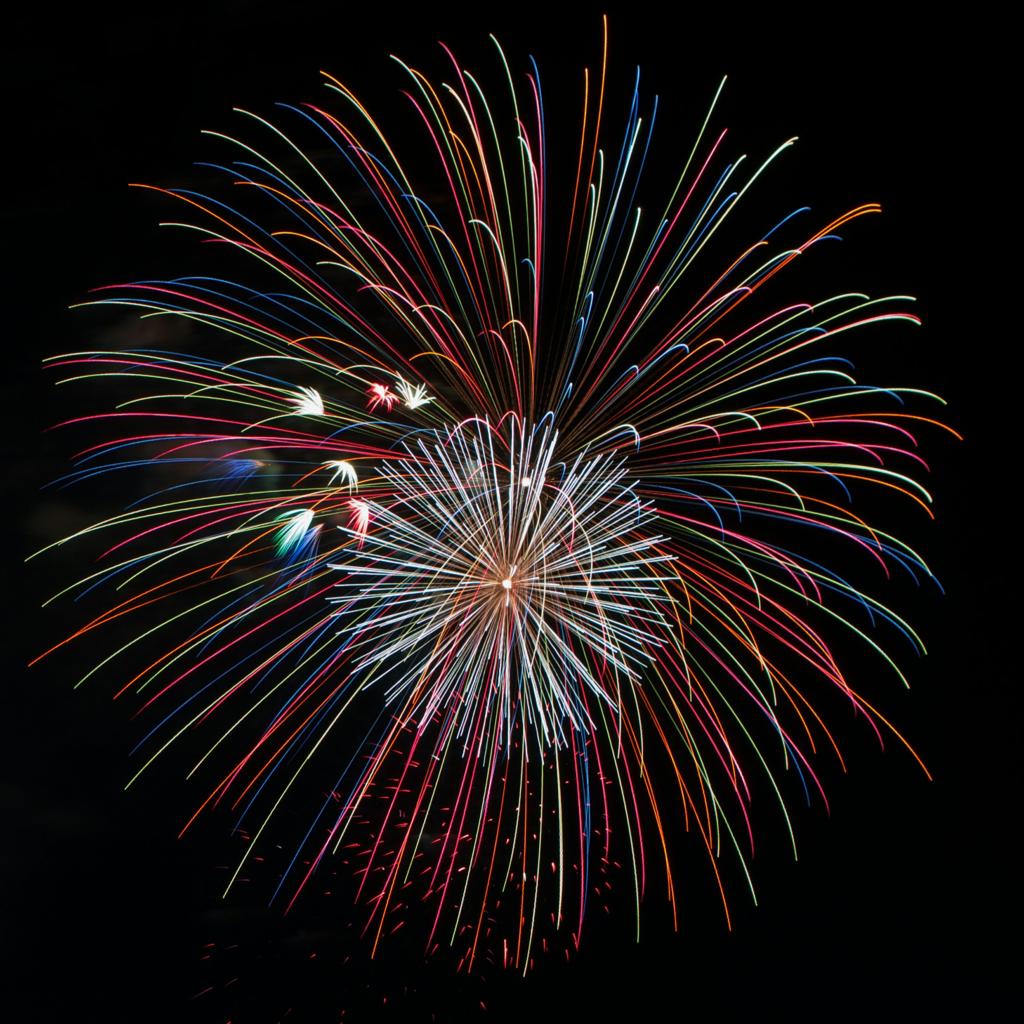
Timing is important. A longer exposure can capture the complete movement of a burst rather than one bright point. If you can anticipate the launch, begin shortly before the main effect and end after the trail completes. A remote shutter or timer can reduce camera shake.
Video Tips and Honest Promotion
For video, stability is usually more important than extreme zoom. Record at the highest practical quality, keep the frame steady and avoid repeatedly changing exposure. Record a few seconds before and after the main effect so the clip has a natural beginning and ending. Vertical video is useful for short-form social media, while horizontal video works well for websites and longer presentations.
For Olira Fireworks, promotional footage should represent products honestly. Do not edit a demonstration to make an effect appear dramatically larger, louder or longer than it was. If footage is illustrative rather than a direct demonstration of the exact product, label it clearly. Obtain appropriate permission where identifiable people appear in promotional content.
The best fireworks photograph is not the closest photograph. It is the photograph that captures the effect clearly from a safe, stable position.